Introduction: Why Offerwall Ads Still Matter and Matter More in 2026
Despite rapid changes in mobile advertising, one fundamental truth remains unchanged in 2026: most app users never pay.
Whether you’re running a game, a fintech app, a content platform, or a utility product, the majority of your user base contributes value through engagement, but not through direct purchases. Traditional monetization methods such as banner ads, interstitials, and even rewarded video struggle to fully capture this value without degrading the user experience.
This is where Offerwall ads continue to stand out.
Offerwalls have evolved from a “gaming-only reward feature” into a full-fledged monetization and user acquisition strategy. In 2026, they are no longer just about rewards; they are about choice, intent, and long-term engagement.
This guide is written for:
- App developers exploring sustainable monetization
- Marketers looking for performance-driven UA channels
- Product teams trying to monetize without harming UX
Rather than repeating surface-level definitions, this blog explains how Offerwalls actually work today, why they succeed where other formats fail, and how both advertisers and publishers should approach them in 2026.
What is an Offerwall
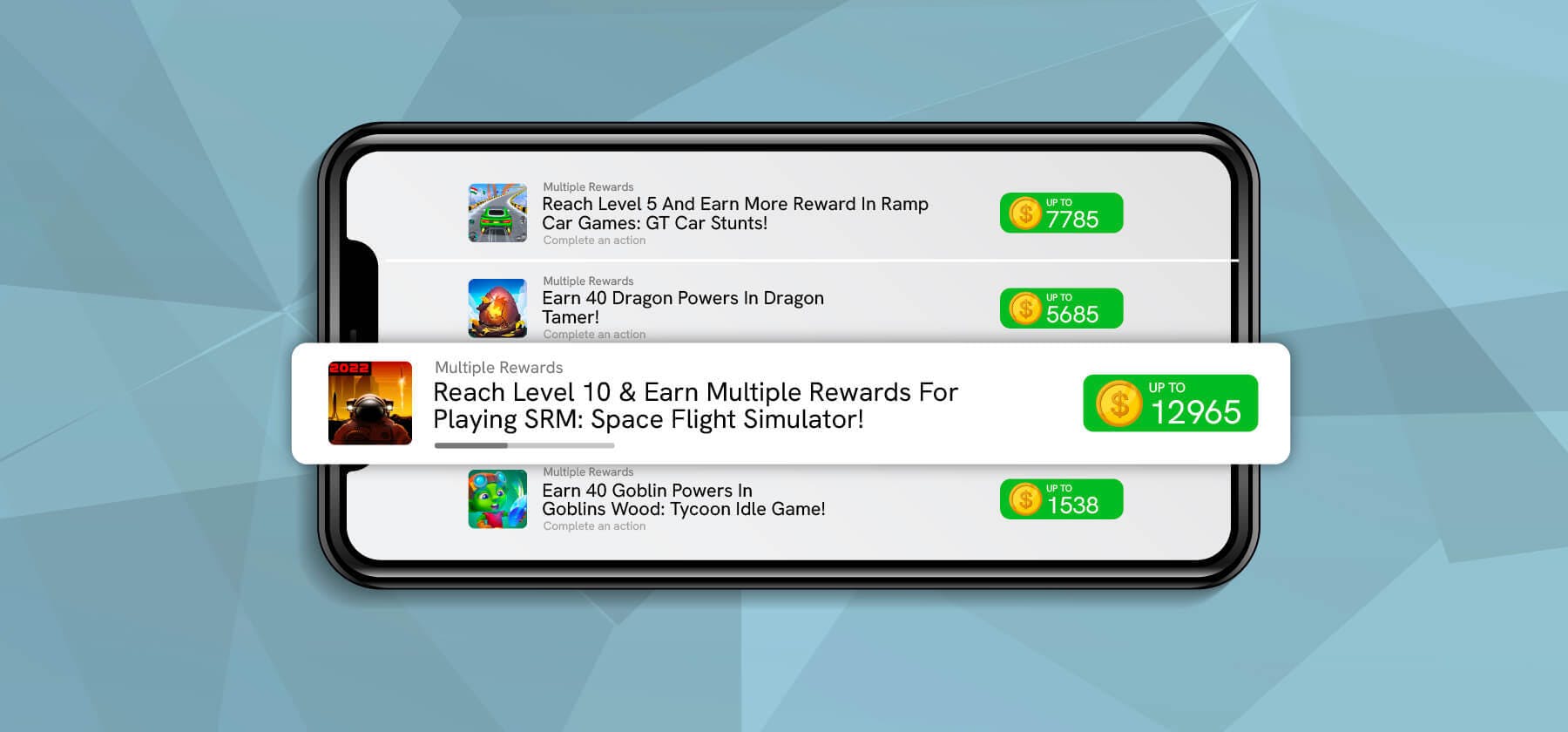
An Offerwall is an in-app or on-site experience that presents users with a curated list of optional tasks. When users voluntarily complete these tasks, they receive rewards that are meaningful within the app’s ecosystem.
What distinguishes Offerwalls from traditional ads is intent.
Users are not interrupted. They are not forced. Instead, they make a conscious decision to engage because the reward aligns with their motivation, whether that’s unlocking content, earning in-app currency, progressing faster, or gaining premium access.
In 2026, Offerwalls typically include tasks such as:
- Installing and using another app
- Completing onboarding or key milestones
- Registering or subscribing to a service
- Watching rewarded content
- Completing surveys or mini-engagements
Unlike banners or pop-ups, Offerwalls feel closer to a feature than an ad. When implemented correctly, users perceive them as a value exchange rather than a monetization tactic.
How Does Offerwall Work: The Full Ecosystem Explained
Offerwalls operate through a carefully balanced ecosystem involving three key participants: advertisers, platforms, and publishers.
Advertisers use Offerwalls to reach users who are willing to engage beyond a passive install. Instead of paying for impressions, advertisers pay for measurable actions, such as onboarding completion, feature usage, or account registration. This makes Offerwalls particularly attractive for brands focused on user quality rather than raw volume.
Offerwall platforms act as the connective layer. They host offers, manage attribution, detect fraud, optimize offer matching, and ensure that rewards are delivered accurately and efficiently. In 2026, the sophistication of these platforms has increased significantly, with AI-driven matching and stricter compliance becoming the norm.
Publishers integrate the Offerwall into their app or website using SDKs, APIs, or web-based solutions. Once integrated, users can browse offers, complete tasks, and receive rewards, while publishers earn revenue for each successful engagement.
Offerwalls are typically positioned in high-traffic areas or strategic locations. Here, a user will be tempted to gain a reward. Offerwalls occur in various formats, and they are as follows.
- Creating an account
- Registering as a user
- Making an in-app purchase
- Watching a video
- Completing a level
- Taking a survey
- Playing a mini-game within the app
Users can earn multiple incentives if they opt to proceed with any of the above-mentioned options. These incentives include extra lives, an ad-free experience, in-app currencies, extra points, external currencies or rewards, and more.
The most important shift in recent years is this:
Offerwalls are no longer about showing as many offers as possible. They are about showing the right offer to the right user at the right moment.Why Offerwalls Are a Core Monetization Layer in 2026
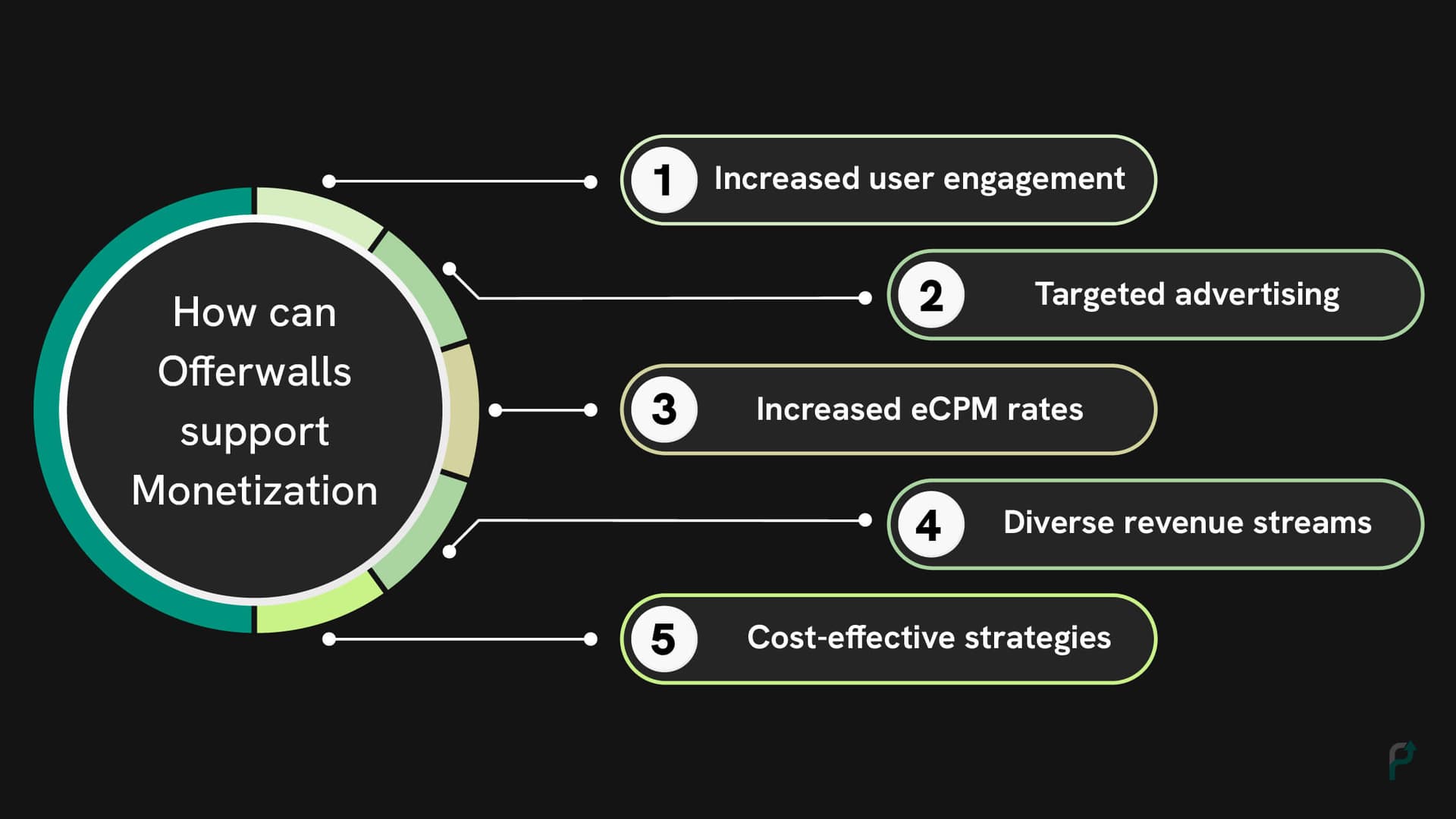 How Offerwalls Support Monetization
-
Monetizing the Silent Majority: Non-Paying Users
Across most apps, 70–90% of users never make a purchase. Ignoring this segment leaves a significant portion of potential revenue untapped.
Offerwalls monetize these users without pressuring them into purchases. Instead of forcing a transaction, they provide alternative paths to value creation. A user who would otherwise generate zero revenue can now contribute through engagement-driven actions.
This shift has made Offerwalls one of the most effective tools for inclusive monetization, where every user has a way to contribute value.
-
Higher Engagement Equals Higher Revenue Quality
Because Offerwall users opt in voluntarily, their engagement tends to be deeper. Advertisers are willing to pay higher rates for users who complete meaningful actions rather than passive impressions.
This leads to stronger effective CPMs, better conversion rates, and more predictable revenue streams for publishers.
-
Revenue Diversification and Stability
Relying solely on in-app purchases or programmatic ads exposes apps to volatility, whether from market shifts, policy changes, or seasonality.
Offerwalls diversify revenue by introducing engagement-based earnings. This balance helps stabilize monetization performance, especially during periods when ad rates fluctuate or user spending declines.
-
Cost-effective strategies
Offerwalls are extremely cost-effective and any follow one of the three following options:
- Cost Per Install (CPI): An advertiser pays a publisher or an ad network only when a user installs the app.
- Cost Per Engagement (CPE): An advertiser pays a publisher or an ad network only when a user unlocks a particular level in the game.
- Cost Per Lead (CPL): An advertiser pays a publisher or an ad network only when a user registers with the app.
By following these payment models, Offerwall has ensured that users pay only when they complete a particular action. This provides a higher return on investment.
Transform Engagement into Earnings with Offerwalls!

Offerwalls as a User Acquisition Channel: Beyond Monetization
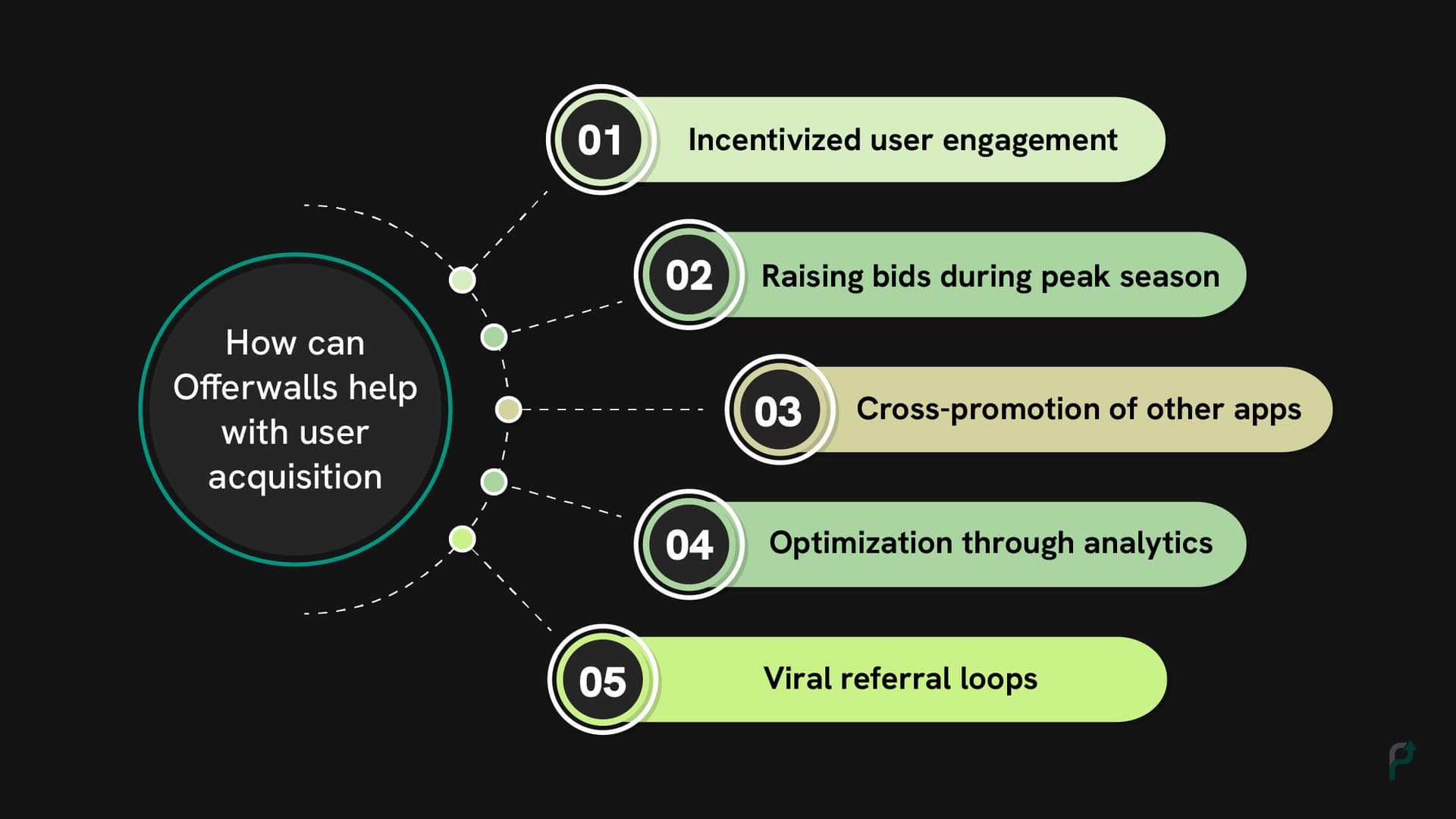 How Offerwalls Helps User Acquisition
While Offerwalls are often associated with monetization, they have become an increasingly important user acquisition channel.
Unlike traditional UA campaigns that optimize for installs alone, Offerwalls focus on post-install engagement. Advertisers can design campaigns where payment is triggered only after a user completes a meaningful action, such as finishing onboarding, reaching a certain level, or using a core feature.
This Cost Per Engagement (CPE) approach improves return on ad spend and reduces the risk of low-quality traffic. In 2026, many advertisers prefer Offerwalls precisely because they provide better signals of long-term value than installs alone.
Overall, Offerwalls are a powerful strategy to increase user engagement and retention. Needless to say, they have proven to be an effective user acquisition tool that can attract high-quality customers. One can up their user acquisition strategy with Offerwalls in many ways.
They are as follows:
-
Incentivized user engagement
Traditional user acquisition campaigns often focus on speed, driving as many installs as possible within a limited budget. However, this approach frequently results in users who churn quickly or never meaningfully engage with the app. Offerwalls take a fundamentally different approach by rewarding intentional engagement rather than passive actions.
When users choose to complete an Offerwall task, such as onboarding, feature exploration, or milestone completion, they are actively investing time and effort into the app. This voluntary participation creates a stronger psychological commitment compared to forced or interruptive ads. As a result, Offerwall-acquired users tend to explore the app more deeply, spend more time within it, and show higher retention rates. For advertisers, this translates into fewer wasted installs and a user base that is more likely to convert into long-term value.
-
Raising bids during peak season
Seasonality plays a major role in user acquisition performance. During high-traffic periods such as holidays, festivals, or major events, competition for user attention intensifies, and traditional UA channels often become costlier and less efficient.
Offerwalls allow advertisers to respond to these fluctuations with greater precision. By increasing bids during peak demand windows, advertisers can secure higher visibility for their offers without sacrificing quality. Because Offerwall users are already motivated by rewards, higher bids during these periods often lead to deeper engagement rather than superficial installs. When combined with well-timed placements and relevant offers, this strategy helps advertisers capitalize on seasonal traffic spikes while maintaining healthy retention and engagement metrics.
-
Cross-promotion of other apps
Cross-promotion has long been a part of mobile growth strategies, but Offerwalls make it significantly more effective by aligning promotions with user motivation. Instead of forcing users to encounter unrelated ads, Offerwalls present cross-promoted apps as optional, reward-driven opportunities.
For example, a user playing a puzzle or casual game may be offered an incentivized task to try another game within a similar genre. Because the user opts in and receives a tangible reward, the experience feels less like an ad and more like an extension of their existing interests. This approach benefits both parties: the host app retains engagement through rewards, while the promoted app acquires users who are already predisposed to enjoy similar content. Over time, this leads to higher-quality cross-app traffic and better long-term performance for advertisers.
-
Optimization through analytics
One of the strongest advantages of Offerwalls as a UA channel lies in the depth of data they generate. Unlike install-based campaigns that provide limited post-install insights, Offerwalls allow advertisers to track user behavior across multiple engagement milestones.
By analyzing metrics such as task completion rates, drop-off points, lifetime value (LTV), and return on ad spend (ROAS), advertisers can continuously refine their acquisition strategy. Historical performance data helps identify which types of tasks attract the most valuable users and which rewards drive sustained engagement. This insight enables advertisers to design Cost Per Engagement (CPE) campaigns that prioritize long-term value over short-term volume, resulting in more predictable and scalable user acquisition outcomes.
-
Viral referral loops
Offerwalls also enable organic growth through incentivized referrals, turning existing users into active acquisition channels. By rewarding users for inviting friends or family members, apps can tap into trusted social networks rather than relying solely on paid media.
Because referred users often share similar interests and usage patterns with the referrer, they tend to integrate more naturally into the app ecosystem. Offerwall-powered referral programs reinforce this effect by clearly communicating the value exchange: users understand exactly what they gain by sharing the app, and new users join with a clear incentive to engage. Over time, these referral loops contribute to sustainable user acquisition while strengthening community-driven growth.
Offerwall vs Rewarded Video vs Traditional Ads
The fundamental difference between Offerwalls and other ad formats lies in control and depth.
Banner ads demand attention but rarely receive it. Rewarded video offers short-term engagement but often fails to sustain long-term value. Offerwalls, on the other hand, allow users to choose how and when they engage.
This sense of autonomy significantly improves user satisfaction and retention. When users feel in control, monetization stops feeling like an interruption and starts feeling like an opportunity.
Placement Strategy: Where Offerwalls Actually Perform
Placement is critical to Offerwall success. In 2026, the best-performing Offerwalls are those placed at decision points, not entry points.
High-performing placements include in-app stores where users look for ways to earn currency, reward hubs designed specifically for incentives, and moments of progression where users need additional resources.
Poor placements, such as forced pop-ups or early-session interruptions, often reduce engagement and harm trust. The goal is to integrate Offerwalls naturally into the user journey, not force them into it.
Some of the best places to serve Offerwall ads are as follows:
-
Home page
The home screen is the first thing users see or come in contact with when they open an app. It also has the most number of users passing through the app. So placing an ad on the home page will increase user engagement and drive traffic effectively.
-
In-app stores
If an app user is looking to make some hard cash, the first place they visit is the in-app store. It is advisable to place the Offerwall ads in the stores, allowing users to make hard currency without having to navigate through the entire app.
-
Pop-ups
Pop-ups are useful for promotional ads, especially offers that double rewards over a limited period of time. To ensure that the pop-up is not unnoticed, it would be beneficial if the pop-up is shown as soon as a user opens the app.
What Advertisers Need to Succeed with Offerwall Ad
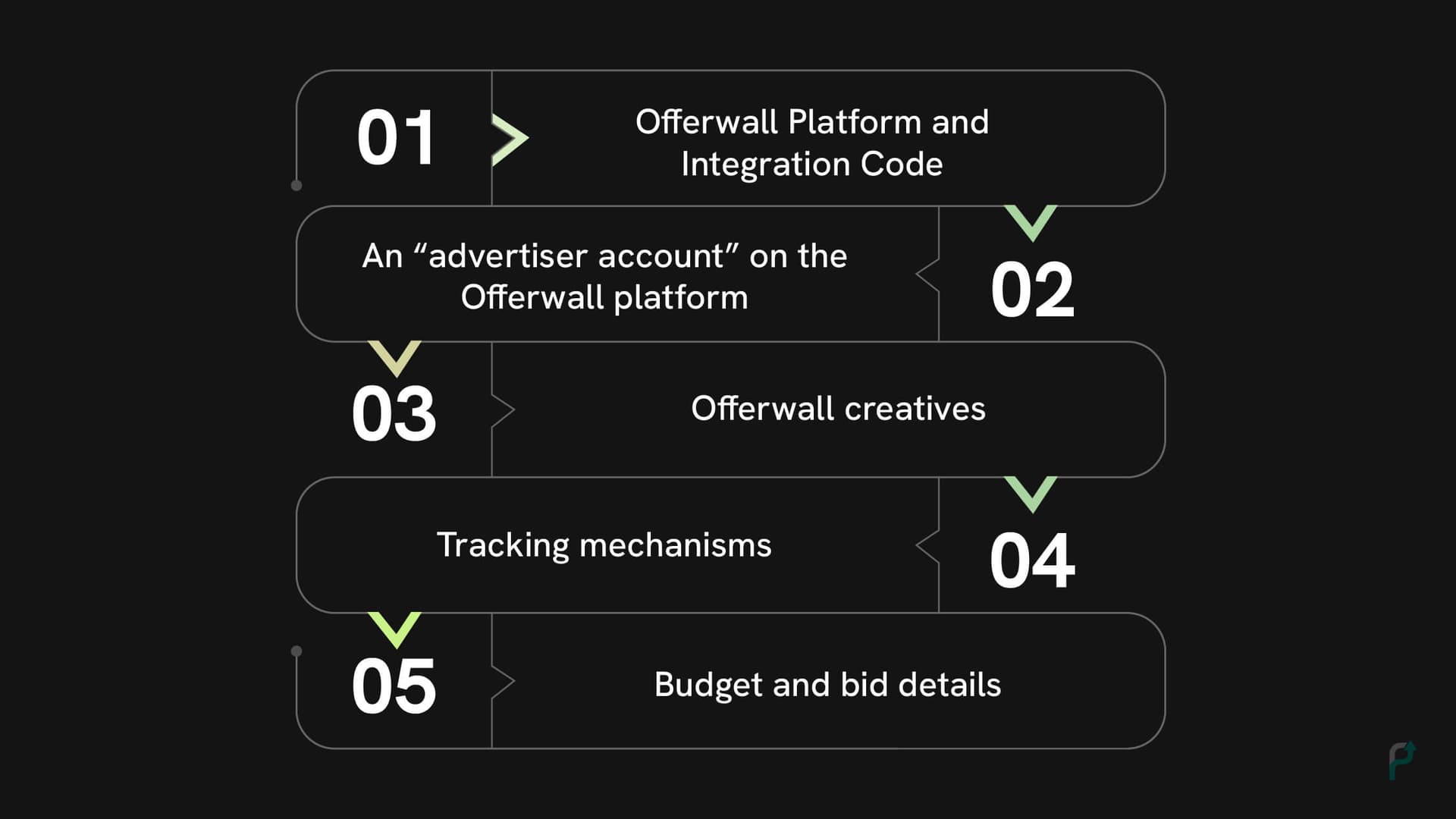 Essentials for Offerwall Advertising
Successful Offerwall campaigns require clarity and realism. Advertisers must define actions that are meaningful but achievable, align rewards with effort, and invest in creative clarity.
In 2026, advertisers who fail with Offerwalls often make the mistake of optimizing for volume rather than quality. High churn, poor retention, and wasted budgets usually follow.
Those who succeed focus on user experience within the offer itself, ensuring that the task feels worthwhile and the reward feels fair.
-
Offerwall Platform and Integration Code
To run an Offerwall campaign effectively, advertisers need access to a dependable Offerwall platform that can host, manage, and optimize incentivized offers. This platform should provide a centralized system for campaign management along with the required integration code or SDK. Once integrated, the Offerwall can be delivered seamlessly within publisher apps, ensuring accurate tracking, reward attribution, and smooth user experiences throughout the engagement journey.
-
An “advertiser account” on the Offerwall platform
An advertiser account is essential for setting up and managing Offerwall campaigns. Through this account, advertisers can create offers, configure targeting, adjust bids, and monitor performance. Having a dedicated dashboard allows advertisers to make data-driven decisions and optimize campaigns continuously based on engagement and conversion insights.
-
Offerwall creatives
Strong creatives play a crucial role in Offerwall performance. Advertisers must prepare clear visuals, headlines, and descriptions that communicate the task and reward without ambiguity. Equally important is the Offerwall prompt, which sets expectations and encourages action. Simple, direct calls to action, such as installing an app, completing a task, or watching a video, help users understand the effort required and improve completion rates.
-
Tracking mechanisms
Reliable tracking and reporting mechanisms are critical to evaluating Offerwall success. Advertisers should track not only clicks and completed actions but also post-engagement behavior to assess user quality. Access to detailed performance data enables advertisers to move beyond surface-level metrics and refine campaigns for better retention and long-term value.
-
Budget and bid details
Defining budgets and bid strategies upfront is essential for sustainable Offerwall campaigns. Advertisers must choose the right pricing model, such as CPI, CPA, or CPE, and align bids with the level of effort expected from users. Thoughtful budget planning helps maintain control over spending while ensuring campaigns scale effectively and deliver consistent results.
What does a publisher need to run an Offerwall ad
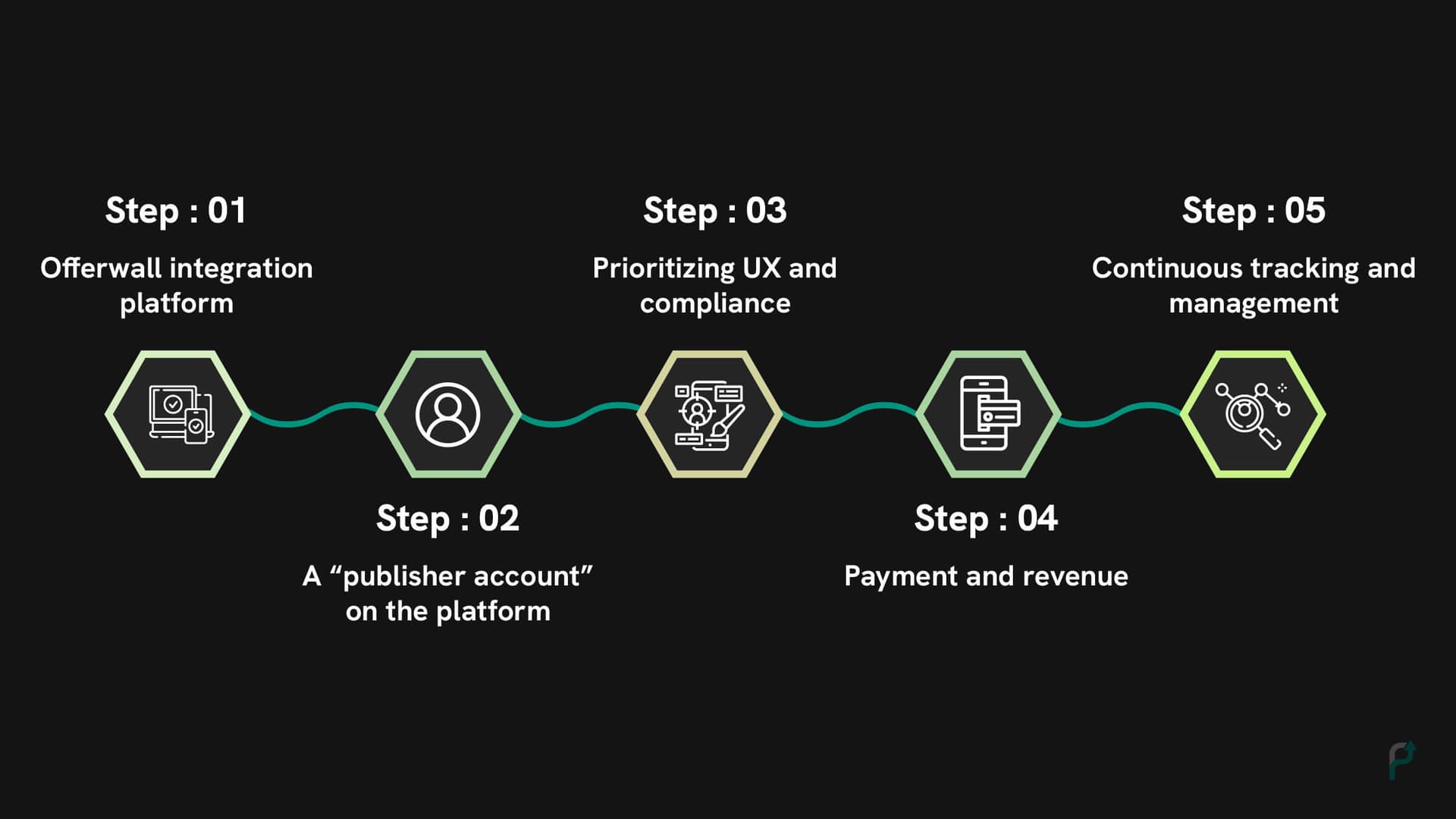 Essentials for Offerwall Publishing
For publishers, Offerwalls work best when treated as a product feature, not an ad placement.
This means carefully balancing reward economics, avoiding offer overload, and continuously monitoring performance. Publishers must also ensure compliance with platform policies and maintain transparency with users.
In 2026, trust is a monetization asset. Offerwalls that respect users tend to outperform those that exploit them.
A publisher will need to have the following prerequisites to run a successful Offerwall campaign:
-
Offerwall integration platform
To run Offerwalls successfully, publishers must first integrate the Offerwall functionality into their app or website using the Offerwall SDK or integration code provided by the Offerwall platform. A clean and stable integration ensures that offers load correctly, rewards are credited accurately, and user interactions remain smooth throughout the experience.
-
Publisher account on the platform
Publishers are required to create a publisher account on the Offerwall platform to manage their monetization setup. This account provides access to essential tools for configuring Offerwall placements, controlling offer visibility, monitoring performance, and making ongoing adjustments based on user behavior and revenue insights.
-
Prioritizing user experience and compliance
User experience is a critical factor in Offerwall performance. Publishers should avoid overcrowding the Offerwall with too many offers and ensure that placements feel like a natural part of the app or website. At the same time, it is essential to comply with platform policies and regional regulations, ensuring that all displayed offers meet quality and compliance standards.
-
Payment structure and revenue understanding
Publishers must clearly understand the payment models and revenue-share arrangements offered by the Offerwall platform. Revenue is generated when users complete actions or engage with offers, making transparency around payouts, reporting cycles, and thresholds important for sustainable monetization planning.
-
Continuous tracking and optimization
Running Offerwalls effectively requires ongoing monitoring and optimization. Publishers should regularly test placements, evaluate performance metrics, and refine their Offerwall strategy based on results. Staying informed about platform updates, best practices, and evolving user behavior helps ensure long-term performance and revenue stability.
Criteria to integrate Offerwall in games
Offerwall performs best on gaming apps. To integrate Offerwall into games, certain noteworthy criteria need to be met. They are as follows:
-
Robust in-app purchase economy
For a user to click on a reward and make in-app purchases, The Offerwall reward needs to be appealing. Games with a robust economy that involves hard currencies perform well with an Offerwall. They tend to bring about long-term retention and high engagement.
-
Create Offerwall placements
Serving Offerwall ads at the right time, and placement, and after segmenting users and doing so creatively can play a huge role in increasing eCPM. This level of optimization will help engage with users and ultimately, retain them.
Challenges of working with Offerwall and how to overcome them
Offerwalls are not without challenges. Ad fatigue, poor-quality offers, and reward imbalance can all reduce effectiveness.
However, these issues are not inherent to Offerwalls themselves; they are usually the result of poor execution. Rotating offers, refreshing creatives, segmenting users, and aligning rewards with effort can resolve most problems.
When Offerwalls are thoughtfully managed, they consistently outperform many traditional monetization formats. Understanding these challenges early helps publishers and advertisers maintain performance without compromising user experience.
-
Risk of diverting users to other apps
Because Offerwalls often include cross-promoted apps, there is a risk that users may shift their attention away from the host app. If not managed carefully, this can impact engagement or session depth. To counter this, publishers should focus on re-engagement strategies within their own app, such as time-bound rewards, progression-based incentives, or reminders that encourage users to return after completing an external offer.
-
Impact on in-app purchase behavior
An excessive focus on incentivized rewards can sometimes affect an app’s in-app purchase economy, particularly if rewards are perceived as a substitute for paid content. This challenge can be addressed by maintaining a clear balance between Offerwall rewards and premium purchases. Segmenting users and limiting Offerwall access for high-value spenders helps protect long-term revenue while still monetizing non-paying users effectively.
-
Ad fatigue and declining engagement
Repeated exposure to the same offers or an overcrowded Offerwall can lead to ad fatigue, reducing user interest over time. To avoid this, Offerwalls should be refreshed regularly with new and relevant offers. Rotating campaigns, varying reward types, and controlling exposure frequency help sustain engagement and prevent users from becoming disengaged.
Facing issues while integrating an Offerwall SDK?

Offerwall ads best practices
The most successful Offerwalls in 2026 share a few common traits. They are branded to feel native, segmented to match user intent, and continuously optimized based on real performance data.
They evolve alongside the app, rather than remaining static. This adaptability is what allows Offerwalls to remain relevant even as user behavior changes.
-
Branding the Offerwall experience
When an Offerwall feels like a natural extension of the app rather than a separate ad unit, users are more likely to engage with it. Consistent branding, native design elements, and seamless placement help the Offerwall blend into the overall experience. When positioned as a rewarding feature instead of an advertisement, Offerwalls see higher participation and completion rates.
-
User segmentation and Offerwall customization
User behavior and preferences vary widely across demographics and usage patterns. Segmenting users based on factors such as activity level, location, or in-app behavior allows publishers to show more relevant offers. Tailoring Offerwalls to specific user segments improves engagement by aligning tasks and rewards with individual interests
-
Special promotions and limited-time rewards
Time-bound incentives such as doubled or boosted rewards can significantly increase user participation. Limited-time promotions and short-term campaigns create a sense of urgency, encouraging users to complete tasks sooner. When used strategically, these promotions can lift engagement without overwhelming the overall reward economy.
-
Testing multiple campaigns and formats
Running different Offerwall campaigns with varying rewards, placements, or task types helps identify what resonates most with users. A/B testing allows publishers to compare performance and refine their strategy over time. Continuous experimentation ensures that Offerwall performance improves as user behavior evolves.
-
Keeping offers fresh and up to date
Regularly updating the Offerwall with new or rotated offers prevents fatigue and keeps users interested. When users encounter varied tasks and rewards during repeat visits, they are more likely to remain engaged and interact with the Offerwall over longer periods.
The Future of Offerwalls: What Lies Ahead
Looking beyond 2026, the future of Offerwalls is expected to become even more integrated into app ecosystems. As engagement-based monetization continues to grow, Offerwalls will likely act as retention engines, not just revenue tools.
With improvements in personalization, fraud detection, and analytics, Offerwalls are positioned to remain a cornerstone of sustainable app growth.
Key takeaways
Offerwalls are no longer optional experiments. In 2026, they represent a strategic layer that bridges monetization, engagement, and acquisition. Apps that understand and implement Offerwalls thoughtfully can unlock revenue from users who would otherwise contribute nothing, while maintaining a positive user experience.
We hope you gained many insights from this blog. Keep watching this space for more such articles.


The only ad platform built for developers by developers.
Contact us now for a product that fits your needs! It’s quick, simple and easy.