How Fruity Match unlocked a 40% eCPM lift, on the same ad slots.

Fruity Match
Game
Immersive Ads
Service used
SDK
Integration Type
+42%
eCPM
Highlights
~1.9× Click Rate
+40% eCPM
+68% More Clicks
Game Profile
Fruity Match Mayhem is a casual game with a loyal, repeat-session audience. Revenue on this game had been a little slow, and the usual demand-side levers had stopped moving it. So PubScale looked at the other half of the monetization equation, whether users had simply stopped noticing the ads. The answer wasn't more demand, it was something very obvious. Here's the test, the result, and why placement design turned out to be the lever that demand optimization couldn't reach.
The Challenge
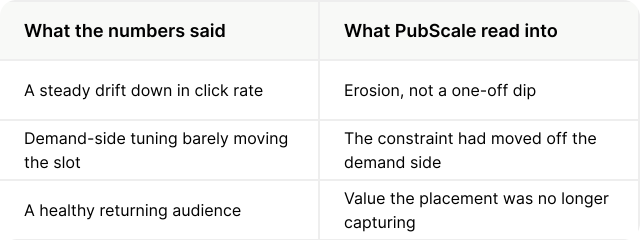
One gameplay slot had stopped pulling its weight. The demand feeding it was fine, the click rate was not, and it had been drifting down quietly enough that the usual response.
When the demand is healthy and the slot still underperforms, the constraint is not on the side everyone tunes first. A fixed placement that a loyal audience sees session after session does not lose its demand. It loses its audience's attention, and the revenue that rides on that attention drains with it. PubScale stopped tuning the part that was already working and went after the part that was actually stuck.
 Fruity Match
The Approach
PubScale ran an A/B test between two versions of the gameplay placement, splitting traffic between them and running for roughly two to three weeks to gather meaningful data:
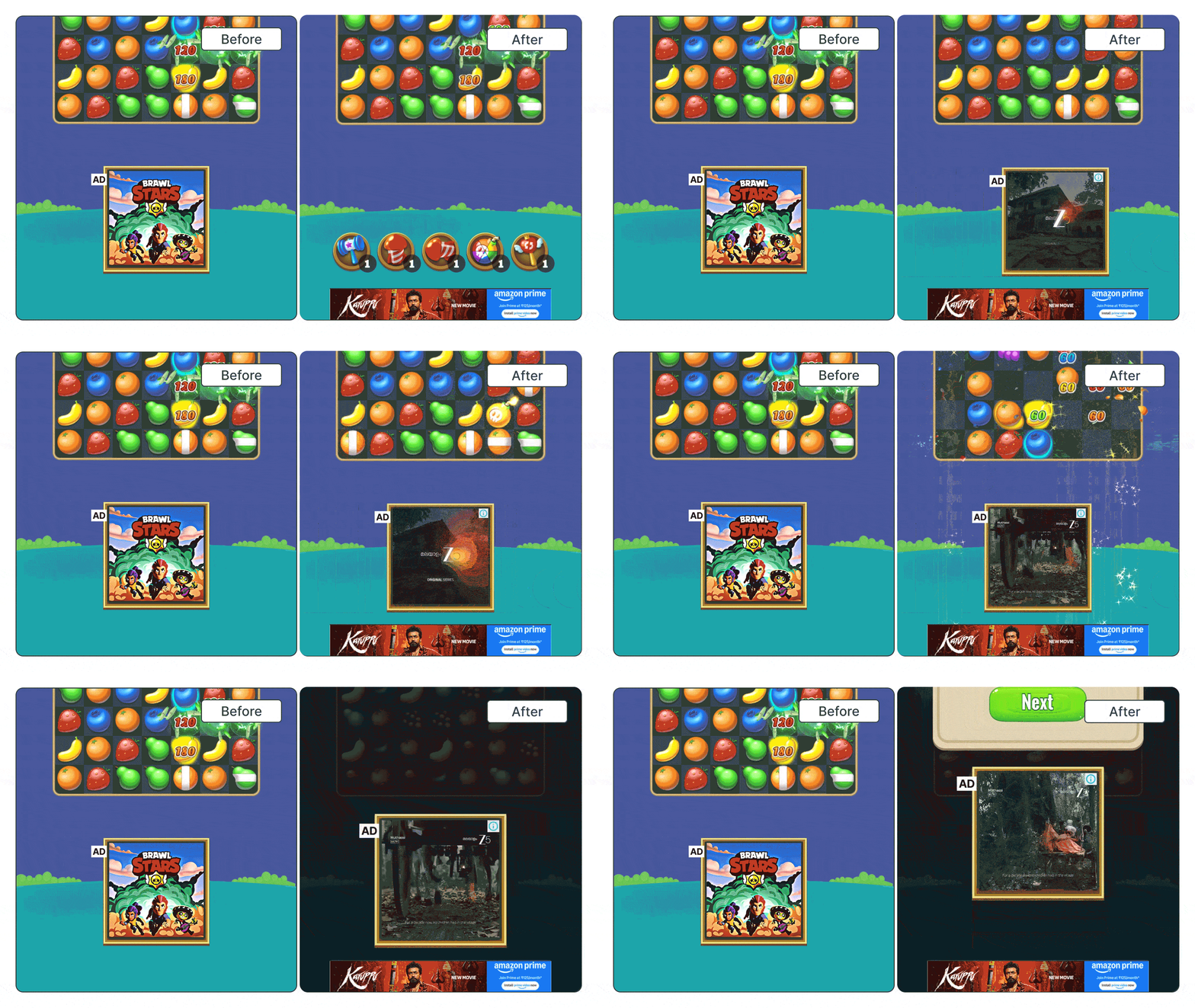
- Static placement - the traditional gameplay ad unit, with no movement or animation.
- Motion placement - the same gameplay slot, redesigned with visual movement and animated transitions to draw the eye.
The crucial design decision was in the timing. The motion unit didn't simply stay on screen, it entered, remained visible for 10 seconds, exited, and reappeared 10 seconds later: an effective 20-second cycle. The static unit ran on the same 20-second refresh interval.
Matching the refresh structure is what makes the result trustworthy. With both units on the same 20-second cadence, the comparison isn't muddied by one unit refreshing more often than the other. What's left as the variable is exactly what the test set out to measure: movement and visual design.
 Fruity Match Game
The Results
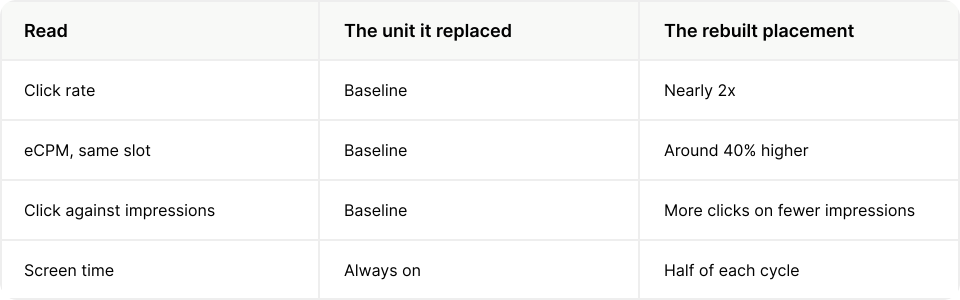
On the same slot, the rebuilt unit nearly doubled the click rate against the placement it replaced. eCPM rose by around 40%. It pulled close to 70% more clicks while serving fewer impressions, so the gain was not exposure. It was the engagement.
The rebuilt unit was visible for only half of each cycle. It spent the other half off screen entirely, and it still beat a unit that was on screen the whole time.
 Fruity Match
The two units ran in different windows rather than side by side, so we read the outcome through the per-impression rates. Click rate and eCPM hold up across timing and volume, which is why they carry the result and the raw totals stay to one side.
Conclusion
When a slot on a healthy game goes quiet and the demand side has nothing left to give, the instinct is to tune harder. Most of the time there is nothing left to tune. The value has not left the inventory. It has stopped being seen, and no amount of demand work brings it back.
PubScale found that on Fruity Match Mayhem and rebuilt for it, and the slot started paying what the audience was always worth. From the outside this usually looks like a game that is already well monetized. It often is, right up until someone looks at the half of the equation the demand reports never show.



The only ad platform built for developers by developers.
Contact us now for a product that fits your needs! It’s quick, simple and easy.